
This page is also available in / Cette page est également disponible en:
 Français (French)
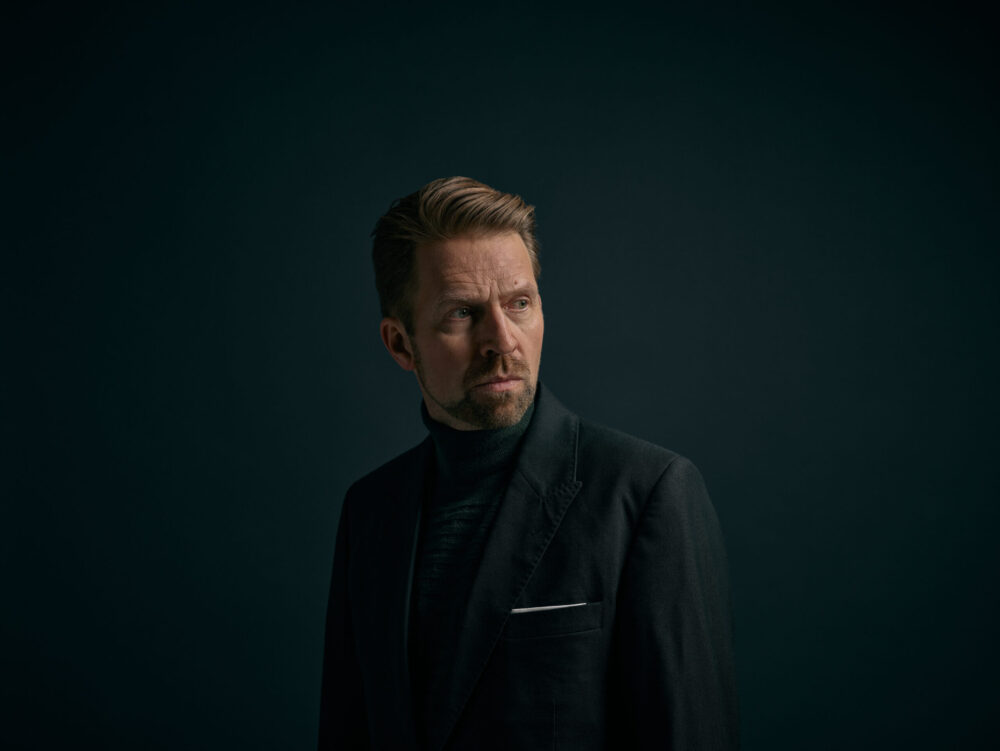
Leif Ove Andsnes rarely takes time off from music. Winter, summer, spring, autumn—it fills his days and, sometimes, his nights. At 9:30 p.m. on the evening of our Zoom meeting, the Norwegian pianist was getting ready to sit down at the keyboard for another rehearsal session. His concerts at the Rosendal Chamber Music Festival on the west coast of Norway and then at the Chamber Music Festival in the capital, Oslo, had barely ended when the artist was already looking ahead to the new season that awaits him. And what a season it will be! In the space of just a month and a half, Andsnes will tour Europe with violinist Christian Tetzlaff, followed by a tour of South America and another in Japan as a recitalist. Between trips from one continent to another, he will stop off in Montreal for Bourgie Hall’s season-opening concert on Oct. 2.
Montreal stopover
The pianist’s previous appearances in the city date back several years, even decades. He performed twice with the Orchestre symphonique de Montréal under guest conductors Stanisław Skrowaczewski in the late 1990s and Roger Norrington in 2011. Thus, his Bourgie Hall concert marks only his third Montreal appearance in a career spanning more than 35 years, and his first local recital. The program features works by Edvard Grieg — Norway’s national treasure, Robert Schumann, and Frédéric Chopin.
Contrasts and similarities
As Andsnes tells us, these three composers have had a significant influence on his career. “I’ve had periods in my life where I’ve been obsessed about Schumann,” he says. “Everything is out in the open with him. I love his strengths and weaknesses. I have so much sympathy for his personality. Besides, his music is absolutely glowing with imagination. Carnaval, Op. 9, is one of his really successful early piano pieces. There was nothing like that before: a new sort of program music, which is partly based on his imaginary world, his [fictional]Davidsbündler [companions of David]society, partly based on real persons like Chopin, Clara Schumann, or Paganini.”

Photo: Helge Hansen
In many ways, Andsnes considers Chopin to be the exact opposite of Schumann. This is one of the reasons why he chose to conclude his recital with the 24 Preludes. “Whereas Schumann wants to describe characters and situations, Chopin represents absolute music. Although his music can sound very descriptive, he doesn’t give us any clues and always hides behind abstract titles—ballads, impromptus—and in this case, preludes. These are two completely different attitudes toward composing. The fascinating thing with Chopin is his incredible diversity—from pieces of the greatest beauty and longing, to others that are abstract miniatures, sounding almost like modern music, or else dramatic pieces, sometimes just for entertainment. In this kind of manic way of composing miniatures, he reminds us of Schumann—but, surely, in a different language. Their works contrast each other and have similarities.”
As an introduction to these two musical personalities, Andsnes will play his compatriot Grieg’s Piano Sonata in E minor, Op. 7. “He wrote this piece when he was 21 years old, having just finished his studies in Leipzig. One of his earlier experiences, at the age of 17 or so, was when he attended a concert of Clara Schumann playing her husband’s Piano Concerto. This, of course, influenced his own concerto later on. He adored Schumann, and the sonata I’ll be playing also contains a lot of Schumannesque figures. It sometimes reminds me of the Second Piano Sonata.”
Embedded in the music
For Andsnes, playing music inevitably involves a degree of research and analysis. “I think it’s necessary to know the starting context and background of the pieces, but it’s more in marginal cases that I might read about it. The research resides mainly in the score. [The goal is] to be a detective—to actually find the truth of the music and go to the core of it.”
It’s all about balance. After three decades on stage and some 40 recordings to his credit across various labels, the Norwegian pianist now aspires to a broader vision of interpretation, while retaining the same attention to detail he had at age 20. At that time, he was particularly concerned with the sound of the instrument, but he lacked that extra degree of appreciation. “With the years of experience, you have a little bit more the bird’s perspective,” he says, “seeing things from above, the whole architecture, the longer breaths in the piece. To get that bigger scope while having the same attention to detail is my goal.”

Photo: Geoffroy Schied
Conducting the Norske Kammerorkester and Mahler Chamber Orchestra from his keyboard—a form of tête-à-tête that was very common in the days of Haydn, Mozart and Beethoven—has certainly given Andsnes a fresh perspective on music. At the same time, this experience has allowed him to satisfy another need as an artist. “I like the feeling of telling, sharing a story when I’m playing. Of course, there’s not always a certain narrative set into music. It can just be sounds and contrasts. What I found to be very positive in those projects where I’ve been leading chamber orchestras myself is that I’m in the narrative of the music all the time. When you’re a soloist, you’re a little bit on and off, you wait for your entrance, and [then]you leave it to the conductor. It has been very liberating for me to be part of the orchestra, being able to give energy to others. The entries of solo parts might happen more organically because of my constant contribution in the shaping of the sound. This feels very natural in music [of the Classical era], for sure. However, when you get to the later years of the 19th century, the music has fluctuation, rubati and so on. It’s more difficult to lead. I wouldn’t go further than Beethoven in that configuration [being among the orchestra], most of the time. When I’m playing Schumann or Brahms, I really need a conductor.”
Over time, Andsnes has expanded his repertoire to include a wide variety of styles and periods, including 20th-century and contemporary Norwegian composers whom he dreams of bringing to wider attention. The consequence of such a vast repertoire is that 20 years may sometimes pass before the performer returns to the same work. Each time, he rediscovers with fascination the power of the human brain and the memory of the body. “Human beings who specialize in certain things have a great capacity for memory,” says Andsnes. “For me, it’s unbelievable that somebody can memorize an epic text for a big role during two to three hours on stage, whether it’s by Shakespeare or Ibsen. I’m very bad at it but of course with music—through my fingertips, through my heart, I don’t know exactly what triggers the memory, what makes it work—I can memorize whole concertos or programs. It feels like bread and butter for me. I’ve done it since I was little.”
Something special
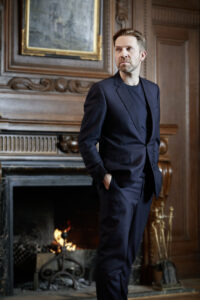
Photo: Gregor Hohenberg
Starting to play the piano at the age of five is nothing unusual. However, performing in recitals at 14, making your debut at 18 and going on tour with an orchestra at 20 is something only a handful of artists achieve. Talking about his first recital, he says: “I was still in normal school, just practising in the afternoons and evenings. Looking back at the program I performed that time, I’m actually very surprised at how big it was. I did Chopin’s second piano sonata, studies by Liszt, Norwegian contemporary music, Mozart, and Handel. … I do remember it was an amazing feeling to be able to do this. There was an audience in the local community where I was from [the island of Karmøy], and even a critic who nicely boosted my confidence. I told myself: ‘People really want to listen to me. I must have something to offer.’ It gave me self-confidence and the feeling of how wonderful it was to do such a thing—that it was a language in which I could communicate.”
Andsnes also recalls his first steps in the professional world, sharing some of the keys to his success along the way. “It started in Norway,” he says. “I made my debut in certain recitals, I was slowly invited to play with professional orchestras. I won second prize at the Eurovision competition [young musicians category]that was broadcast on TV channels through Europe and quite important when I was 18. Performing at the Concertgebouw in Amsterdam, in this context, opened up some doors for me, especially with the Oslo Philharmonic and Mariss Jansons. They took me on tour a year later. Suddenly, I found myself being 20 and having a record contract. I was lucky to start my career in a time where there was a CD boom. A young company, Virgin Classics, wanted to sign me and it was all very exciting. I started with them, then transferred to EMI Classics,” notes Andsnes, now with Sony Classical. In November, he will release a new recording of Schubert’s four-hand pieces with Bertrand Chamayou, on the Warner label, alongside a tour of France.
Andsnes has not forgotten his first teacher, Jiri Hlinka. This Norwegian of Czech origin took him under his wing, first in private lessons when the young prodigy was 15, and then at the Bergen Conservatory of Music for several years. He introduced him to the music of Janáček, which became a true favourite that has accompanied the pianist throughout his career. In January, as part of an American tour, Andsnes will perform Janáček’s little-known cycle of 15 piano pieces, On an Overgrown Path, alongside works by Kurtág and Schumann, another of the composers who always seem to follow him.

Photo: Gregor Hohenberg
Leif Ove Andsnes will perform at Bourgie Hall on Oct. 2 as part of the Exceptional Pianists series. For more details on his concert schedule and new releases, visit his website: www.leifoveandsnes.com
www.sallebourgie.ca
Translation: Gianmarco Segato
This page is also available in / Cette page est également disponible en:
Français (French)